
by Cynthia Germain
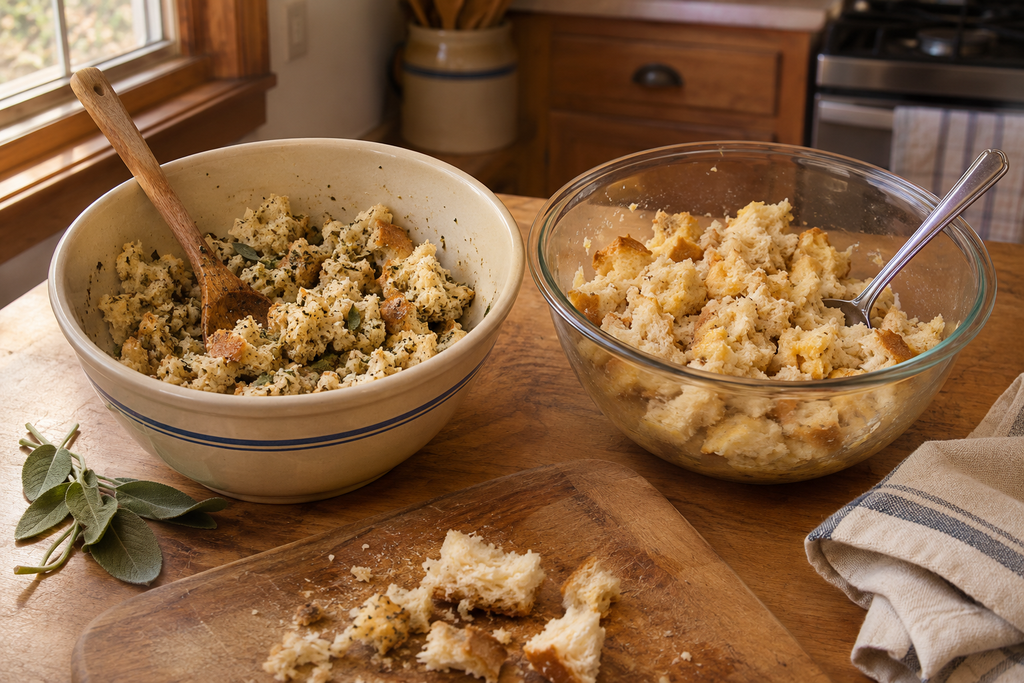
In my family, Thanksgiving meant turkey and two kinds of dressing, sage and sweet. The sage dressing is more traditional, the one you stuff in the bird, and the sweet has butter, sugar, apples and raisins. My grandma made them, then my dad did, and now I do. If you asked me which one I could leave off the menu, I’d have a hard time answering. As far as I’m concerned, there are supposed to be two bowls of dressings on the table.
For years, Dad made the turkey and both dressings. As he got older, he needed more help, so I took on a little more of the work as the years went by. By our last Thanksgiving together, I was doing the cooking and Dad was supervising. With a lot of comments, of course. That’s one of the things I’m especially glad to remember now. I was the one doing the work that day, but it still felt like we were making Thanksgiving dinner together. He knew how he wanted it done. And after all those years of him making it for us, I can appreciate why he’d have a thing or two to say about how I was doing it.
There’s something that feels really good now about getting out the ingredients and making the two dressings. For a little while, I’m doing the same ordinary things he did, and that my grandma did before him. Then there’s something about actually making the traditional dinner that brings them to mind in a way that simply thinking about Thanksgiving doesn’t. It gives me time to remember, and then I get to put something on the table that other people can enjoy, too.
Of course, family traditions change for all sorts of reasons. People move. Times change. The person who always hosted might be ready to let someone else take a turn. Sometimes you realize that the thing you look forward to most is a piece of pie and a chance to sit and talk. If Thanksgiving is changing for you or someone you love, it might help to ask, What part would I really miss if we stopped doing it?
Keep the dish that matters to you. If you’ve always hosted and a whole dinner feels like too much, bring the dish you most enjoy making to someone else’s table. If you’re cooking for one or two, make a smaller batch, freeze a portion for later, or take some to a neighbor who’d enjoy it. You can tell them a little about where the recipe came from, too.
Give people a way to stay involved. If someone has always made a favorite dish, ask what part they’d like to do this year. You can pick up the groceries, do the chopping, lift the heavy pan, or tell you when it’s ready. Sometimes offering to do one specific thing is all it takes to make the rest of the task manageable.
Pass along the things the recipe leaves out. If there’s a dish you’ve always wanted to learn, ask to make it together. Find out how they tell when it’s done, what they add by feel, and who taught them to make it. If you live far apart, try making it in your own kitchen while you talk on the phone. You might end up with two slightly different versions and a good story to tell next year.
Make time for the part you look forward to. If it’s sitting at the kitchen table catching up, invite someone over for pie and coffee. If it’s hearing a story someone always tells, call and ask them to tell it again. You can also make plans for Friday or the weekend, when there’s more time to visit and, with any luck, some pie left.
I think about our last Thanksgiving together when I think about the work we do at Do Good Door County. It’s easy to see that someone could use a hand and jump in to get the whole thing done. It takes a little more attention to find out which part they’d still like to do and how you can help with the rest. That matters in everyday life just as much as it does on a holiday. We all have things we look forward to doing, people we like to do them with, and our own ideas about how they ought to be done. Dad certainly did.
I’ll be making both dressings again this year. And somewhere between the sage and the sweet, I’m sure I’ll think of a comment Dad would have made. I’m looking forward to that.
Enjoying our blog? Support our mission by helping to turn ideas into action. Your donation to Do Good Door County supports programs and collaborations that reduce isolation, strengthen connection, and help make communities in Door County more livable for all.