

by Cynthia Germain
I’ve been thinking a lot lately about grace.
Not grace in a religious sense, but the kind of grace we give another person when we stop before judging. When we ask a question instead of making an assumption. When we recognize that what we see from the outside may be only a very small part of what is happening on the inside.
I think most of us have experienced a time when something didn’t sit right with us. Someone disappointed us. Something wasn’t handled the way we thought it should have been. We didn’t understand a decision or someone’s actions.
And sometimes, we simply walk away.
But what might happen if, before we did, we asked a question?
Maybe the answer wouldn’t change our decision. Sometimes walking away is still the right choice. But perhaps we would understand the situation differently. Perhaps we would discover something we didn’t know. Perhaps we would find a reason to stay. Or maybe we would realize there is something we could do to help.
That takes grace.
It means giving people room to be human…to have a bad day, to make a mistake, to be overwhelmed, to not communicate perfectly, or to be dealing with something we know nothing about.
And the older I get, the more I think this matters.
Aging brings changes that aren’t always visible. Someone may be caring for a spouse. They may be grieving. They may not hear as well as they once did or move as quickly. They may be struggling with something they used to do easily. Or they may simply have a lot more going on than we realize.
But grace isn’t something older adults need from younger people. It goes in every direction and across every generation.
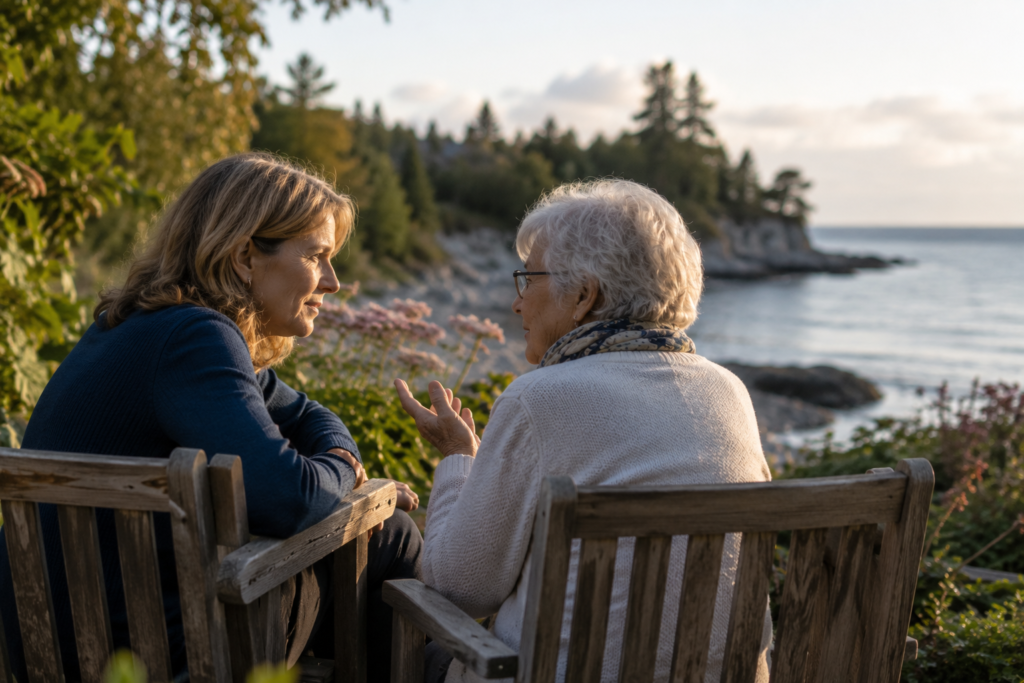
The older person who gets frustrated with technology can give some grace to the young person trying to help. The younger person who doesn’t understand why something takes longer can stop and ask. Neighbors can give one another the benefit of the doubt. Volunteers can recognize that the person they are helping may be having a difficult day. And those receiving help can remember that volunteers have complicated lives too.
People are imperfect.
If we want communities where people look out for one another, we have to leave some room for that imperfection. We have to be willing to ask a question before we form a conclusion. We have to talk to one another instead of about one another. And sometimes, instead of seeing something that isn’t working and walking away, we might ask, “Is there something I can do to help?”
It simply means giving another human being the opportunity to be understood before we decide who they are or what their intentions were. Maybe that’s something we could all use a little more of as we age, not just grace for older adults, but grace for one another.
Because none of us gets through life without needing it.
Enjoying our blog? Support our mission by helping to turn ideas into action. Your donation to Do Good Door County supports programs and collaborations that reduce isolation, strengthen connection, and help make communities in Door County more livable for all.
BRAVO! Excellent article!!