
by Cynthia Germain
As Labor Day approaches, we naturally think about jobs…the work people do and the skills they bring. We may also think about the workers who came before us and helped build the businesses, institutions and communities we rely on today.
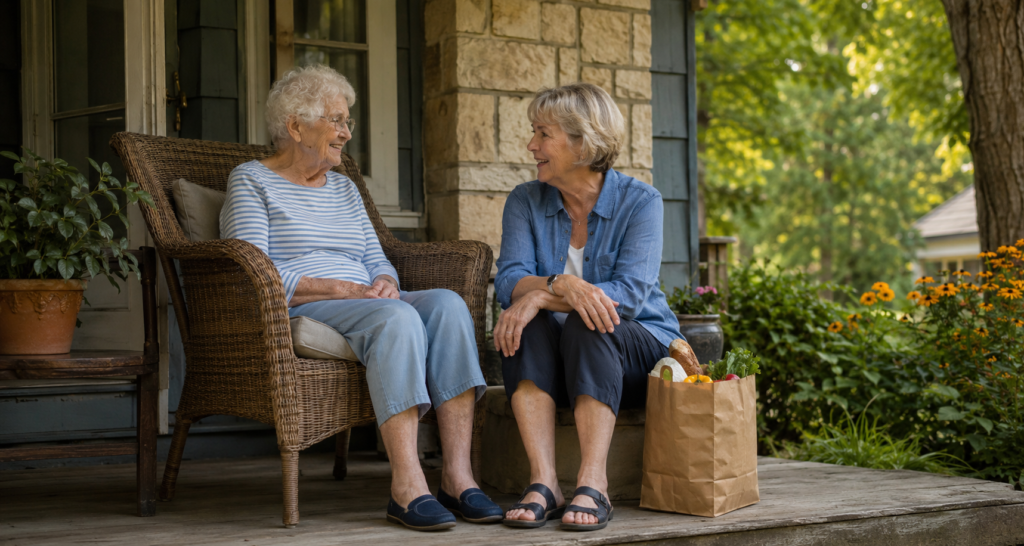
But there is another kind of work happening all around us. It does not come with a paycheck, a job title or a retirement plan. Often, it is not even called work. It is the neighbor who brings in someone’s groceries. The spouse helping a partner through a health change. The grandparent caring for grandchildren. The volunteer driving someone to an appointment, serving on a committee or making a weekly phone call to a person who lives alone.
It is the person who notices what needs to be done and does it.
This work can be easy to overlook because it is woven into everyday life. Yet imagine what would happen if it suddenly stopped. Families would struggle. Organizations would lose much of their capacity. Older adults would have a harder time remaining in their homes. Many people would become more isolated, and our communities would feel far less connected.
As we age, our relationship with work may change, but our desire to contribute usually does not. Some people remain in the workforce well beyond the traditional retirement age. Others leave full-time employment but continue to share decades of knowledge through part-time work, mentoring or community service. Still others become caregivers, volunteers or the dependable person that we that we can call.
A person may no longer be employed and still be doing some of the most meaningful work of their life.
There is value in having a reason to get up in the morning and knowing that someone is counting on us. Contributing can give our days structure, connect us with other people and remind us that we still have something important to offer. At the same time, we need to be careful not to assume that every older adult has unlimited time and energy simply because they are retired. Caregiving and volunteering can be rewarding, but they can also be physically and emotionally demanding.
That means the work of caring for a community must be shared. A community that supports aging well is not built by one organization, one program or one especially dedicated group of people. It is built through many small acts carried out by people of every age.
It also happens when we allow ourselves to receive help. For people who have spent a lifetime working, raising families and caring for others, accepting assistance can be difficult. We may feel that we should still be able to manage everything ourselves. But communities are strongest when giving and receiving are understood as parts of the same relationship. Today I may carry your groceries. Tomorrow you may be the person who calls to see how I am doing.
None of us remains only the helper or only the person who needs help. Over a lifetime, we will likely be both.
This Labor Day, let us honor the people who show up for paid work each day and the generations of workers whose efforts helped shape the lives we have now. But let us also recognize the quieter work that happens in kitchens, living rooms, churches, nonprofit offices and neighborhoods throughout Door County.
It is the work of caring, connecting and paying attention. It may never appear on a résumé or a time sheet, but it is the work that holds a community together.
Enjoying our blog? Support our mission by helping to turn ideas into action. Your donation to Do Good Door County supports programs and collaborations that reduce isolation, strengthen connection, and help make communities in Door County more livable for all.